First place with a grade of “satisfactory” is no reason to celebrate. In 2024, Münster once again tops the city ranking of the ADFC Bicycle Climate Test in its size category. Yet despite the top ranking, the overall grade remains a sobering “satisfactory”. It is a result that stands out not for enthusiasm – but for stagnation. After all, Münster received the same rating back in 2022. For Volt, one thing is clear: first place with a “satisfactory”
First place with a grade of “satisfactory” is no reason to celebrate.
In 2024, Münster once again tops the city ranking of the ADFC Bicycle Climate Test in its size category. Yet despite the top ranking, the overall grade remains a sobering “satisfactory”. It is a result that stands out not for enthusiasm – but for stagnation. After all, Münster received the same rating back in 2022. For Volt, one thing is clear: first place with a “satisfactory” result is no reason for complacency – but a clear mandate to act.
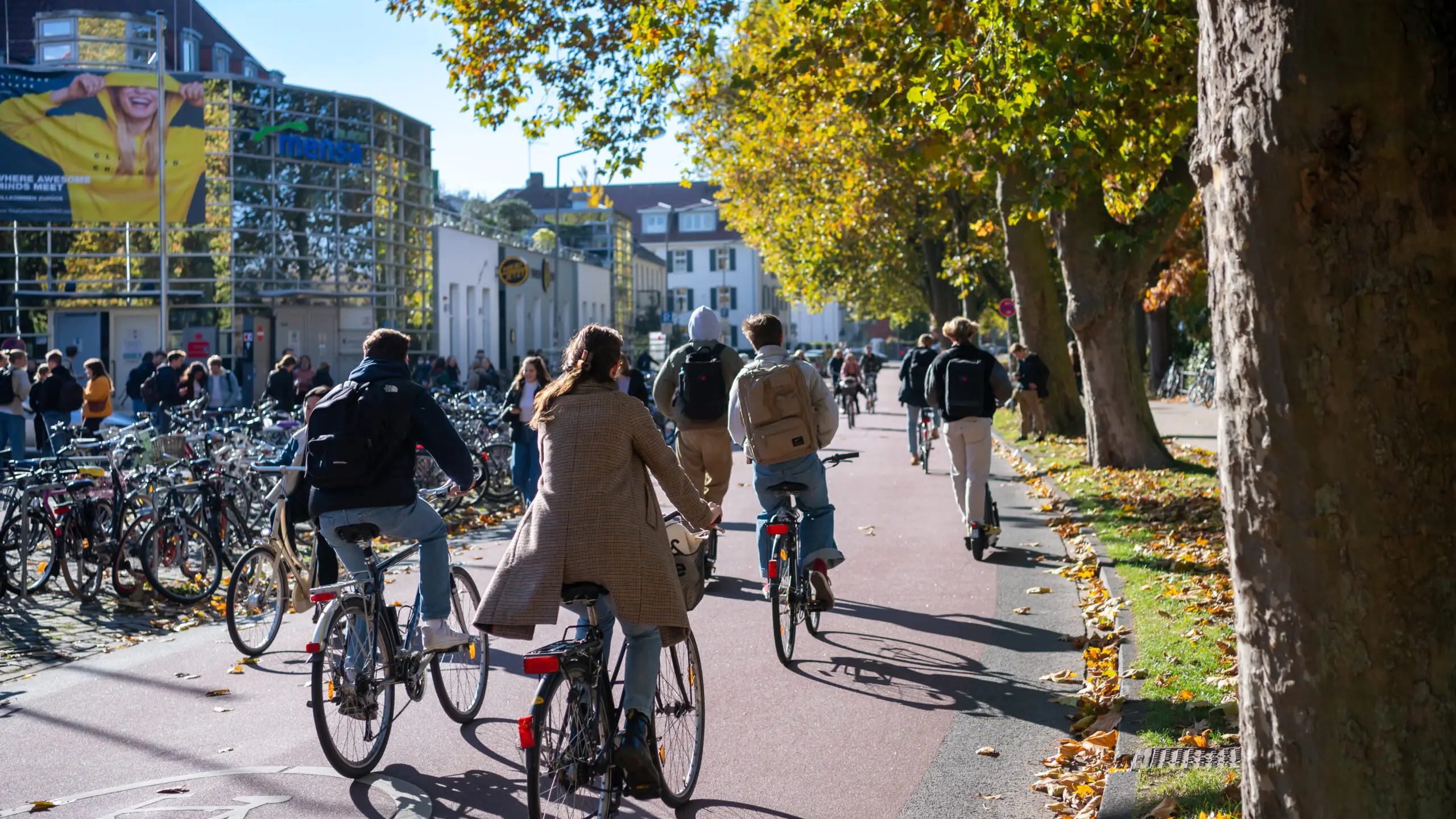
Admittedly, Münster continues to impress with a strong cycling culture, targeted public outreach and a high level of everyday cycling. The city centre is easy to reach from many places. But where it really counts in everyday life, cyclists are regularly held up – or brought to a halt: bumpy cycle paths (grade 3.7), unfavourable traffic light phasing (3.5) and barely noticeable checks on illegal parking (3.9) make cycling a test of patience.
“Cycling in Münster often means riding with the handbrake on – on paths that are too narrow, with frequent stops at junctions and constantly swerving around parked cars,” says Sebastian Kappen, summing up the situation. “The fact that hardly anything has changed in years is disappointing.”
For Volt, this result is no cause for resignation – but a wake-up call. If Münster takes its climate targets seriously, the bicycle must become a genuine, safe and comfortable alternative for everyone – not just on posters, but on the street. What has long been reality elsewhere should finally be implemented consistently in Münster: safe roundabouts based on the Dutch model, continuous fast cycle routes (Velorouten), intelligent traffic light phasing and bicycle parking garages that are accessible around the clock. The examples in the Netherlands and Denmark show how it can be done – Münster must finally work to catch up again.
What is needed now is not the next pilot project, but the courage to make consistent change. Volt stands for a city in which cycling is not just possible, but second nature – comfortable, safe and climate-friendly.
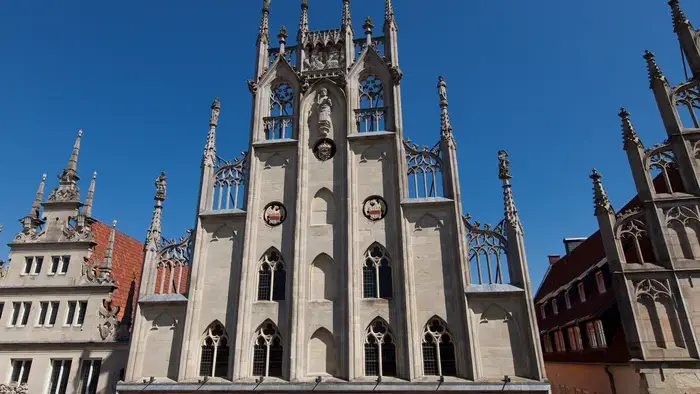
Photo: Stadt Münster/Michael Möller
Note:
In the original version of this report, we referred to a result “with a three before the decimal point”. In fact, the overall grade of 2.97 is just below 3. We have corrected this.